


Carmel Mid-Year Market Report: 2025 vs. 2026
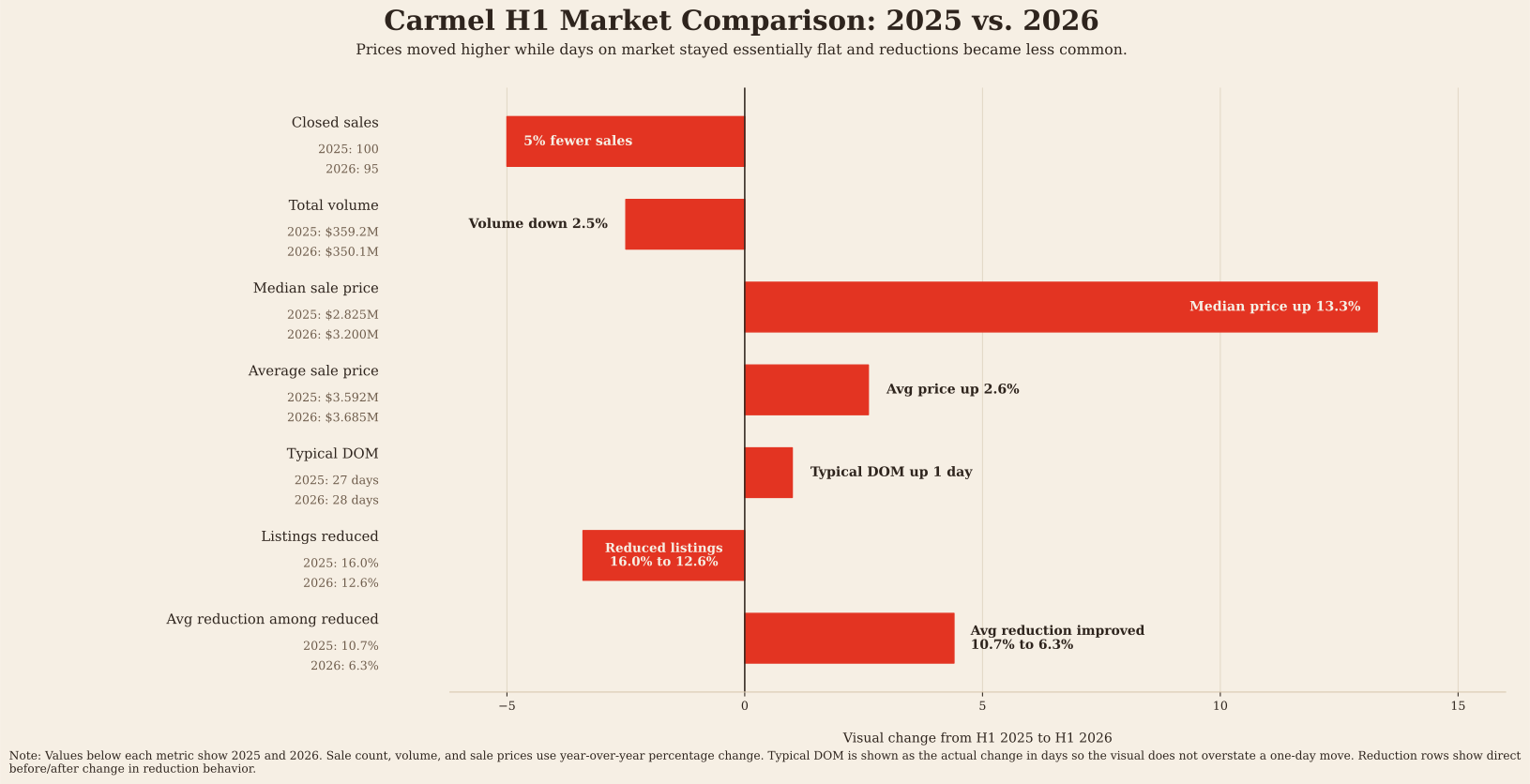
Carmel Market Update: First Half of 2025 vs. First Half of 2026
The Carmel market is still showing strength, but the data tells a more nuanced story than simply “prices are up” or “the market is slower.”
In the first half of 2026, Carmel had slightly fewer closed sales than the same period in 2025, but the median sale price moved higher. Median days on market stayed almost the same, increasing by just one day. That means homes are not taking dramatically longer to sell overall. Instead, the data suggests that well-priced homes are still moving, while overpriced homes are the ones facing more resistance.
The median sale price rose from approximately $2.825 million in the first half of 2025 to approximately $3.2 million in the first half of 2026. That is a meaningful year-over-year increase. At the same time, the percentage of listings with price reductions actually declined, and the average reduction among reduced listings was smaller in 2026 than it was in 2025.
In simple terms: the market is not weak, but it is selective.
What This Means for Home Sellers
For sellers, the biggest takeaway is that pricing strategy matters.
The homes that are priced correctly from the start are still attracting buyers and selling in a reasonable amount of time. But when a home comes on the market too high, buyers are noticing. Those listings tend to sit longer, and once a listing starts to feel stale, sellers often have to make a larger correction than they would have needed if they had priced more accurately from the beginning.
This does not mean sellers need to underprice their homes. It means they need to price with discipline.
A strong asking price should be ambitious but still connected to current buyer behavior, recent comparable sales, condition, location, and competition. In today’s Carmel market, buyers are willing to pay for quality, location, and scarcity — but they are less willing to chase a price that feels disconnected from the market.
The best seller strategy is to launch with confidence, but not ego. The first few weeks matter. That is when a listing has the most attention, the most energy, and the best chance to create urgency.
What This Means for Home Buyers
For buyers, the data shows that there may be opportunities, but not every listing should be approached the same way.
A home that is fresh to the market and priced well may still sell close to asking price, especially if it is in a desirable location or has limited competition. In that case, a very low offer may not be a smart strategy.
On the other hand, if a home has been sitting for a while, has already had a price reduction, or appears overpriced compared to similar recent sales, the buyer may have more room to negotiate.
The key is not simply asking, “How much below list can we offer?” The better question is, “What does the data say this home is worth, and how motivated does the seller appear to be?”
Buyers should also be careful when reading headline price numbers. Carmel is a small and high-end market, so a few luxury sales over $10 million can affect the overall numbers. That is why it is important to look beyond just the median or average price and understand which types of homes are actually selling.
The Bottom Line
The Carmel market remains active, but it is not forgiving of poor pricing.
For sellers, the message is clear: pricing correctly from the beginning gives you the best chance of selling faster and closer to your asking price.
For buyers, the opportunity is not simply to offer less on every home. The opportunity is to understand which listings are truly well-priced, which are overpriced, and where the data supports negotiation.
In this market, strategy matters on both sides.
Highlight: Southwest Carmel; The Golden Rectangle
Remained one of the strongest-performing areas.
Median sale price increased from approximately $4.05 million in the first half of 2025 to $4.5 million in the first half of 2026. Homes did take longer to sell, with median days on market rising from 1 day to 14 days, but pricing remained strong and price reductions were limited.
